Buy consulting24.eu ?
We are moving the project
consulting24.eu .
Are you interested in purchasing the domain
consulting24.eu ?
domain@kv-gmbh.de · 0541-91531010
Buy consulting24.eu ?
Are equilateral triangles always similar?
Yes, equilateral triangles are always similar to each other. This is because all equilateral triangles have the same angles (60 degrees) and all sides are equal in length. Similarity in geometry means that the shapes have the same angles and their sides are proportional. Since equilateral triangles meet these criteria, they are always similar to each other. **
What is an equilateral triangle?
An equilateral triangle is a type of triangle where all three sides are of equal length. This means that all three angles in an equilateral triangle are also equal, each measuring 60 degrees. Equilateral triangles are a special case of an isosceles triangle, where two sides are equal in length. They have a high degree of symmetry and are commonly used in geometry and design due to their balanced and uniform appearance. **

Similar search terms for Equilateral
Top-Angebote
Products related to Equilateral:
-
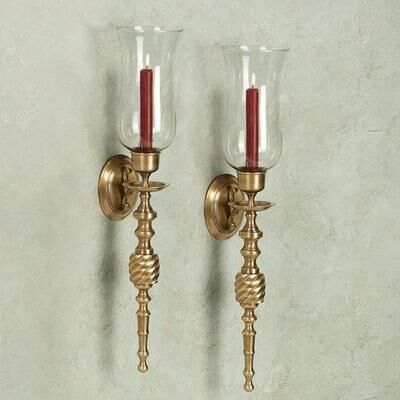
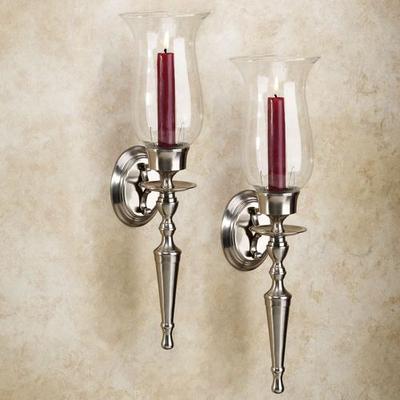
Flythe Consulting Arika Wall Sconce Pair, Pair, Satin NickelThe Arika Wall Sconce Pair is an adaptation of old-fashioned light fixtures, with an appealing design that will complement modern decor. The lacquered solid brass sconces have 4.75 dia.x7 H clear glass hurricanes that will protect your standard...179,00 $*Shipping: 22,95 $Secure redirect to the provider
-
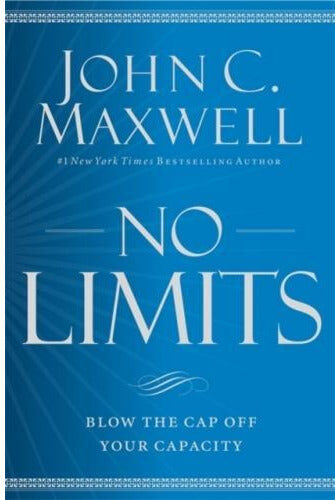
Little Brown Book Group No Limits: Blow the Cap Off Your Capacity by John C. Maxwell – Personal Growth & Leadership Development GuideNo Limits: Blow the CAP Off Your Capacity Description We often treat the word capacity as if it were a natural law of limitation. Unfortunately; most of us are much more comfortable defining what we perceive is off limits rather than what's possible. Could it be that many people have allowed what they perceive as capacity to define them? Have they allowed their perception to limit their attitudes about their potential? In his newest book; John Maxwell identifies 17 core capacities. Some of these are abilities we all already possess; such as energy; creativity and leadership. Others are aspects of our lives controlled by our choices; like our attitudes; character; and intentionality. Maxwell examines each of these 17 capacities; and provides clear and actionable advice on how you can increase your potential in each. He will guide you on how to identify; grow; and apply your critical capacities to your daily life. Once you've blown the 'cap' off your capacities; you'll find yourself more successful--and fulfilled--in your daily life.5,99 £*Shipping: 2,99 £Secure redirect to the provider
-
HARPERCOLLINS Creative Confidence by Tom & David Kelley – Unleashing Your Creative Potential & Innovation MindsetA powerful and inspiring book from the founders of IDEO, the award-winning design firm, on unleashing the creativity that lies within each and every one of us. Too often, companies and individuals assume that creativity and innovation are the domain of the ‘creative types’. But two of the foremost experts in innovation, design and creativity on the planet show us that each and every one of us is creative. In an entertaining and inspiring narrative that draws on countless stories from their work at IDEO, and with many of the world's top companies and design firms, David and Tom Kelley identify the principles and strategies that will allow us to tap into our creative potential in our work lives, and in our personal lives, allow us to think outside the box in terms of how we approach and solve problems. ‘Creative Confidence’ is a book that will help each of us be more productive and successful in our lives and in our careers.4,95 £*Shipping: 1,99 £Secure redirect to the provider
-
DK The Month-by-Month Baby Book: In-depth, Monthly Advice on Your Baby's Growth, Care, and Development in the First YearThe only book new parents will need for the extraordinary first year of their baby's life. This comprehensive book covers every moment of the first twelve months of your baby's life - from their first moments at home, feeding, and sleeping arrangements, to travelling, building their body strength, and starting to eat solids. A team of expert paediatricians, midwives, psychologists, and nutritionists provide unrivalled detail on everything new parents can expect. This new edition has been updated with the latest medical advice for a new generation of parents, and includes reassuring answers to common questions, offering additional support for whenever you need it. The Month-by-Month Baby Book perfectly complements the bestselling The Day-by-Day Pregnancy Book.16,99 £*Shipping: 2,99 £Secure redirect to the provider


-
Are some isosceles triangles also equilateral?
Yes, some isosceles triangles can also be equilateral. An equilateral triangle is a special case of an isosceles triangle where all three sides are equal in length. Therefore, any equilateral triangle is also an isosceles triangle. However, not all isosceles triangles are equilateral, as isosceles triangles only require two sides to be of equal length. **
-
What is an equilateral triangle in mathematics?
An equilateral triangle is a type of triangle where all three sides are of equal length. This means that all three angles in an equilateral triangle are also equal, each measuring 60 degrees. Equilateral triangles are a special case of an isosceles triangle, where two sides are equal in length. They have a high degree of symmetry and are commonly used in geometry and trigonometry. **
-
Is every isosceles triangle an equilateral triangle?
No, not every isosceles triangle is an equilateral triangle. An isosceles triangle has two sides that are equal in length, while an equilateral triangle has all three sides equal in length. Therefore, an isosceles triangle can have two equal sides and one different side, while an equilateral triangle has all three sides equal. **
-
Is there a right-angled equilateral triangle?
No, there is no such thing as a right-angled equilateral triangle. By definition, an equilateral triangle has all three sides of equal length, and all three angles are also equal. In a right-angled triangle, one of the angles is 90 degrees. Since the angles in an equilateral triangle are all 60 degrees, it is not possible for it to have a 90-degree angle and still be equilateral. **


Is the diagonal cut of a square pyramid equilateral?
No, the diagonal cut of a square pyramid is not equilateral. An equilateral shape has all sides and angles equal, while a diagonal cut of a square pyramid creates two triangles with different side lengths and angles. The diagonal cut divides the square pyramid into two separate shapes, each with its own unique properties. **
What are polyhedra made up of equilateral triangles called?
Polyhedra made up of equilateral triangles are called regular tetrahedra. These polyhedra have four equilateral triangles as faces, with each vertex connecting to three edges. Regular tetrahedra are one of the five Platonic solids, which are convex polyhedra with congruent faces and identical vertices. **
Top-Angebote
Products related to Equilateral:
-
EISENBERG Anti-Ageing Expertise skin care setEISENBERG Anti-Ageing Expertise, , Skin Serums for Women, Everything for beautiful-looking skin in one package. The EISENBERG Anti-Ageing Expertise beauty gift set contains not one but several products to help you create or enrich your daily beauty routine and make you or your loved ones happy to get it as a gift. The set contains: Eisenberg Classique Soin Anti-Âge anti-wrinkle firming cream 50 ml Eisenberg Classique Hydra Lifting light gel-cream for intensive hydration 15 ml Eisenberg Classique Sérum Régénérant Liftant anti-wrinkle lifting serum for tired skin 7,5 ml Characteristics: a set of cosmetic products for everyday use products for deep nourishment and hydration for perfectly soft and smooth skin a treat for any woman How to use: Use every product from the cosmetic set according to the instructions.146,80 £*Shipping: 3,99 £Secure redirect to the provider
-
Flythe Consulting Arika Wall Sconce Pair, Pair, Satin NickelThe Arika Wall Sconce Pair is an adaptation of old-fashioned light fixtures, with an appealing design that will complement modern decor. The lacquered solid brass sconces have 4.75 dia.x7 H clear glass hurricanes that will protect your standard...179,00 $*Shipping: 22,95 $Secure redirect to the provider
-
Little Brown Book Group No Limits: Blow the Cap Off Your Capacity by John C. Maxwell – Personal Growth & Leadership Development GuideNo Limits: Blow the CAP Off Your Capacity Description We often treat the word capacity as if it were a natural law of limitation. Unfortunately; most of us are much more comfortable defining what we perceive is off limits rather than what's possible. Could it be that many people have allowed what they perceive as capacity to define them? Have they allowed their perception to limit their attitudes about their potential? In his newest book; John Maxwell identifies 17 core capacities. Some of these are abilities we all already possess; such as energy; creativity and leadership. Others are aspects of our lives controlled by our choices; like our attitudes; character; and intentionality. Maxwell examines each of these 17 capacities; and provides clear and actionable advice on how you can increase your potential in each. He will guide you on how to identify; grow; and apply your critical capacities to your daily life. Once you've blown the 'cap' off your capacities; you'll find yourself more successful--and fulfilled--in your daily life.5,99 £*Shipping: 2,99 £Secure redirect to the provider
-
Are equilateral triangles always similar?
Yes, equilateral triangles are always similar to each other. This is because all equilateral triangles have the same angles (60 degrees) and all sides are equal in length. Similarity in geometry means that the shapes have the same angles and their sides are proportional. Since equilateral triangles meet these criteria, they are always similar to each other. **
-
What is an equilateral triangle?
An equilateral triangle is a type of triangle where all three sides are of equal length. This means that all three angles in an equilateral triangle are also equal, each measuring 60 degrees. Equilateral triangles are a special case of an isosceles triangle, where two sides are equal in length. They have a high degree of symmetry and are commonly used in geometry and design due to their balanced and uniform appearance. **
-
Are some isosceles triangles also equilateral?
Yes, some isosceles triangles can also be equilateral. An equilateral triangle is a special case of an isosceles triangle where all three sides are equal in length. Therefore, any equilateral triangle is also an isosceles triangle. However, not all isosceles triangles are equilateral, as isosceles triangles only require two sides to be of equal length. **
-
What is an equilateral triangle in mathematics?
An equilateral triangle is a type of triangle where all three sides are of equal length. This means that all three angles in an equilateral triangle are also equal, each measuring 60 degrees. Equilateral triangles are a special case of an isosceles triangle, where two sides are equal in length. They have a high degree of symmetry and are commonly used in geometry and trigonometry. **
Similar search terms for Equilateral
-
HARPERCOLLINS Creative Confidence by Tom & David Kelley – Unleashing Your Creative Potential & Innovation MindsetA powerful and inspiring book from the founders of IDEO, the award-winning design firm, on unleashing the creativity that lies within each and every one of us. Too often, companies and individuals assume that creativity and innovation are the domain of the ‘creative types’. But two of the foremost experts in innovation, design and creativity on the planet show us that each and every one of us is creative. In an entertaining and inspiring narrative that draws on countless stories from their work at IDEO, and with many of the world's top companies and design firms, David and Tom Kelley identify the principles and strategies that will allow us to tap into our creative potential in our work lives, and in our personal lives, allow us to think outside the box in terms of how we approach and solve problems. ‘Creative Confidence’ is a book that will help each of us be more productive and successful in our lives and in our careers.4,95 £*Shipping: 1,99 £Secure redirect to the provider
-
DK The Month-by-Month Baby Book: In-depth, Monthly Advice on Your Baby's Growth, Care, and Development in the First YearThe only book new parents will need for the extraordinary first year of their baby's life. This comprehensive book covers every moment of the first twelve months of your baby's life - from their first moments at home, feeding, and sleeping arrangements, to travelling, building their body strength, and starting to eat solids. A team of expert paediatricians, midwives, psychologists, and nutritionists provide unrivalled detail on everything new parents can expect. This new edition has been updated with the latest medical advice for a new generation of parents, and includes reassuring answers to common questions, offering additional support for whenever you need it. The Month-by-Month Baby Book perfectly complements the bestselling The Day-by-Day Pregnancy Book.16,99 £*Shipping: 2,99 £Secure redirect to the provider
-
Officially Licensed Gas Safe Gas Safe® Warning Advisory Report Form - Pad of 50Our Gas Safe Premium Warning Advisory Record Pad features 50 sets of 3-part forms, now fully updated to comply with the latest Danger Do Not Use Warning Notice GSR-DDNUPAD1 regulations. These Licensed Gas Safe Premium Pads are thoughtfully designed in a landscape format, making it easier for engineers to complete records on-site. Each pad includes double covers with a writing guard, reinforced with triple stitching and binding tape for enhanced durability. The forms are individually numbered and perforated on the left-hand side, ensuring the spine remains intact when sections are removed. This pad is ideal for documenting unsafe gas appliance or installation faults, including Immediately Dangerous (ID), At Risk (AR), and Not to Current Standards (NCS) situations. Copies are provided for the gas user, the gas engineer/business, and, when necessary, the landlord.13,50 £*Shipping: 5,00 £Secure redirect to the provider
-
Flythe Consulting Jonetia Hurricane Wall Sconce Pair Satin Brass, Pair, Satin BrassThe Jonetia Satin Brass Hurricane Wall Sconce Pair proudly displays grandeur on your walls. These hand-forged, solid brass sconces feature a diamond design and fleur-de-lis motif. Sconces have a lacquered, satin brass finish that is done by hand. A...229,00 $*Shipping: 32,06 $Secure redirect to the provider
-
Is every isosceles triangle an equilateral triangle?
No, not every isosceles triangle is an equilateral triangle. An isosceles triangle has two sides that are equal in length, while an equilateral triangle has all three sides equal in length. Therefore, an isosceles triangle can have two equal sides and one different side, while an equilateral triangle has all three sides equal. **
-
Is there a right-angled equilateral triangle?
No, there is no such thing as a right-angled equilateral triangle. By definition, an equilateral triangle has all three sides of equal length, and all three angles are also equal. In a right-angled triangle, one of the angles is 90 degrees. Since the angles in an equilateral triangle are all 60 degrees, it is not possible for it to have a 90-degree angle and still be equilateral. **
-
Is the diagonal cut of a square pyramid equilateral?
No, the diagonal cut of a square pyramid is not equilateral. An equilateral shape has all sides and angles equal, while a diagonal cut of a square pyramid creates two triangles with different side lengths and angles. The diagonal cut divides the square pyramid into two separate shapes, each with its own unique properties. **
-
What are polyhedra made up of equilateral triangles called?
Polyhedra made up of equilateral triangles are called regular tetrahedra. These polyhedra have four equilateral triangles as faces, with each vertex connecting to three edges. Regular tetrahedra are one of the five Platonic solids, which are convex polyhedra with congruent faces and identical vertices. **
* All prices are inclusive of VAT and, if applicable, plus shipping costs. The offer information is based on the details provided by the respective shop and is updated through automated processes. Real-time updates do not occur, so deviations can occur in individual cases. ** Note: Parts of this content were created by AI.