Buy consulting24.eu ?
We are moving the project
consulting24.eu .
Are you interested in purchasing the domain
consulting24.eu ?
domain@kv-gmbh.de · 0541-91531010
Buy consulting24.eu ?
Is the transformation of the sentence into a participle construction correct?
Without knowing the specific sentence or participle construction in question, it is difficult to determine if the transformation is correct. However, in general, transforming a sentence into a participle construction involves changing the main verb into a present or past participle form and adjusting the sentence structure accordingly. It is important to ensure that the meaning and tense of the original sentence are preserved in the participle construction. Additionally, the participle construction should be used appropriately within the context of the overall sentence and paragraph. **
'Will + participle 2?'
"Will + participle 2" is a construction used to form the future perfect tense in English. It is used to indicate an action that will be completed before a specific point in the future. This construction is formed by using the auxiliary verb "will" followed by the past participle of the main verb. For example, "By the time you arrive, I will have finished my homework." **
Similar search terms for Participle
Top-Angebote
Products related to Participle:
-
HARPERCOLLINS Creative Confidence by Tom & David Kelley – Unleashing Your Creative Potential & Innovation MindsetA powerful and inspiring book from the founders of IDEO, the award-winning design firm, on unleashing the creativity that lies within each and every one of us. Too often, companies and individuals assume that creativity and innovation are the domain of the ‘creative types’. But two of the foremost experts in innovation, design and creativity on the planet show us that each and every one of us is creative. In an entertaining and inspiring narrative that draws on countless stories from their work at IDEO, and with many of the world's top companies and design firms, David and Tom Kelley identify the principles and strategies that will allow us to tap into our creative potential in our work lives, and in our personal lives, allow us to think outside the box in terms of how we approach and solve problems. ‘Creative Confidence’ is a book that will help each of us be more productive and successful in our lives and in our careers.4,95 £*Shipping: 1,99 £Secure redirect to the provider
-
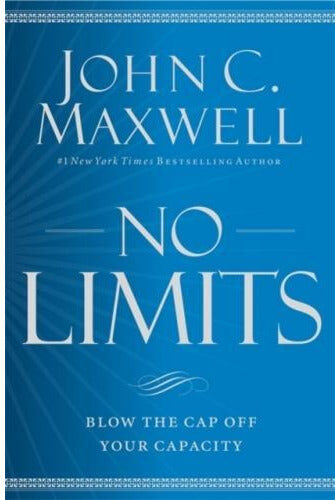
Little Brown Book Group No Limits: Blow the Cap Off Your Capacity by John C. Maxwell – Personal Growth & Leadership Development GuideNo Limits: Blow the CAP Off Your Capacity Description We often treat the word capacity as if it were a natural law of limitation. Unfortunately; most of us are much more comfortable defining what we perceive is off limits rather than what's possible. Could it be that many people have allowed what they perceive as capacity to define them? Have they allowed their perception to limit their attitudes about their potential? In his newest book; John Maxwell identifies 17 core capacities. Some of these are abilities we all already possess; such as energy; creativity and leadership. Others are aspects of our lives controlled by our choices; like our attitudes; character; and intentionality. Maxwell examines each of these 17 capacities; and provides clear and actionable advice on how you can increase your potential in each. He will guide you on how to identify; grow; and apply your critical capacities to your daily life. Once you've blown the 'cap' off your capacities; you'll find yourself more successful--and fulfilled--in your daily life.5,99 £*Shipping: 2,99 £Secure redirect to the provider
-
DK The Month-by-Month Baby Book: In-depth, Monthly Advice on Your Baby's Growth, Care, and Development in the First YearThe only book new parents will need for the extraordinary first year of their baby's life. This comprehensive book covers every moment of the first twelve months of your baby's life - from their first moments at home, feeding, and sleeping arrangements, to travelling, building their body strength, and starting to eat solids. A team of expert paediatricians, midwives, psychologists, and nutritionists provide unrivalled detail on everything new parents can expect. This new edition has been updated with the latest medical advice for a new generation of parents, and includes reassuring answers to common questions, offering additional support for whenever you need it. The Month-by-Month Baby Book perfectly complements the bestselling The Day-by-Day Pregnancy Book.16,99 £*Shipping: 2,99 £Secure redirect to the provider
-
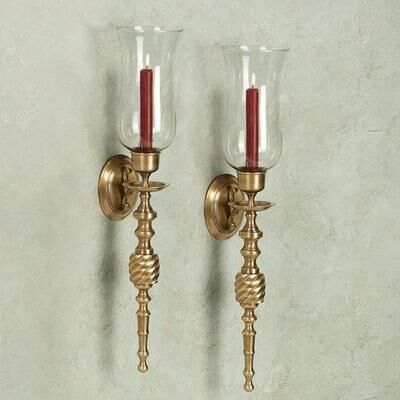
Flythe Consulting Jonetia Hurricane Wall Sconce Pair Satin Brass, Pair, Satin BrassThe Jonetia Satin Brass Hurricane Wall Sconce Pair proudly displays grandeur on your walls. These hand-forged, solid brass sconces feature a diamond design and fleur-de-lis motif. Sconces have a lacquered, satin brass finish that is done by hand. A...229,00 $*Shipping: 32,06 $Secure redirect to the provider



-
What are the Latin forms of the present participle, perfect passive participle, and future active participle?
The Latin present participle is formed by adding -ns, -ntis to the present stem of the verb. For example, the present participle of the verb "amo" (I love) is "amans, amantis" (loving). The perfect passive participle is formed by adding -us, -a, -um to the verb stem. For example, the perfect passive participle of the verb "amo" is "amatus, amata, amatum" (loved). The future active participle is formed by adding -urus, -ura, -urum to the verb stem. For example, the future active participle of the verb "amo" is "amaturus, amatura, amaturum" (about to love). **
-
What are participle clauses?
Participle clauses are a type of clause that uses a present participle (-ing form) or a past participle (-ed form) to provide additional information about the subject of the main clause. They can be used to show simultaneous actions, cause and effect, or to provide descriptive details. For example, in the sentence "Feeling tired, she decided to go to bed," the participle clause "Feeling tired" provides additional information about the subject "she." **
-
What is a participle?
A participle is a form of a verb that can function as an adjective or be part of a verb phrase. There are two types of participles in English: the present participle, which ends in -ing (e.g. "walking"), and the past participle, which can end in -ed, -en, -d, -t, -n, or -ne (e.g. "broken"). Participles are used to modify nouns or pronouns, and they can also be used to form verb tenses such as the present perfect or past perfect. **
-
What is the difference between the past participle and the present participle?
The past participle is a verb form used to indicate a completed action or state that occurred in the past. It is often used with auxiliary verbs to form the perfect tenses (e.g., "has eaten," "had gone"). The present participle, on the other hand, is a verb form used to indicate an ongoing action or state in the present or future. It is formed by adding "-ing" to the base form of the verb and is used to create the progressive tenses (e.g., "is eating," "will be going"). **

How can the terms premature, simultaneous, and subsequent be explained in relation to past participle, present participle, and future participle?
The terms premature, simultaneous, and subsequent can be explained in relation to past participle, present participle, and future participle based on their timing in relation to the action of the verb. The past participle refers to an action that has already been completed, making it premature in relation to the present moment. The present participle refers to an action that is happening at the same time as something else, making it simultaneous. The future participle refers to an action that will happen at a later time, making it subsequent to the present moment. These terms help to clarify the timing of the action in relation to the verb. **
What is a substantivized participle?
A substantivized participle is a verb form that has been turned into a noun by adding a definite article and declining it for case, gender, and number. In other words, it is a participle that has been transformed into a noun and can function as a subject, object, or complement in a sentence. This process allows the participle to take on the characteristics of a noun while still retaining some of its verbal qualities. **
Top-Angebote
Products related to Participle:
-
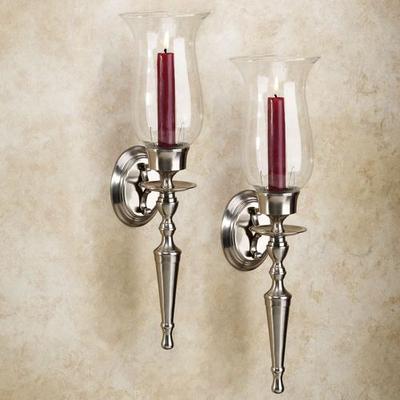
Flythe Consulting Arika Wall Sconce Pair, Pair, Satin NickelThe Arika Wall Sconce Pair is an adaptation of old-fashioned light fixtures, with an appealing design that will complement modern decor. The lacquered solid brass sconces have 4.75 dia.x7 H clear glass hurricanes that will protect your standard...179,00 $*Shipping: 22,95 $Secure redirect to the provider
-
HARPERCOLLINS Creative Confidence by Tom & David Kelley – Unleashing Your Creative Potential & Innovation MindsetA powerful and inspiring book from the founders of IDEO, the award-winning design firm, on unleashing the creativity that lies within each and every one of us. Too often, companies and individuals assume that creativity and innovation are the domain of the ‘creative types’. But two of the foremost experts in innovation, design and creativity on the planet show us that each and every one of us is creative. In an entertaining and inspiring narrative that draws on countless stories from their work at IDEO, and with many of the world's top companies and design firms, David and Tom Kelley identify the principles and strategies that will allow us to tap into our creative potential in our work lives, and in our personal lives, allow us to think outside the box in terms of how we approach and solve problems. ‘Creative Confidence’ is a book that will help each of us be more productive and successful in our lives and in our careers.4,95 £*Shipping: 1,99 £Secure redirect to the provider
-
Little Brown Book Group No Limits: Blow the Cap Off Your Capacity by John C. Maxwell – Personal Growth & Leadership Development GuideNo Limits: Blow the CAP Off Your Capacity Description We often treat the word capacity as if it were a natural law of limitation. Unfortunately; most of us are much more comfortable defining what we perceive is off limits rather than what's possible. Could it be that many people have allowed what they perceive as capacity to define them? Have they allowed their perception to limit their attitudes about their potential? In his newest book; John Maxwell identifies 17 core capacities. Some of these are abilities we all already possess; such as energy; creativity and leadership. Others are aspects of our lives controlled by our choices; like our attitudes; character; and intentionality. Maxwell examines each of these 17 capacities; and provides clear and actionable advice on how you can increase your potential in each. He will guide you on how to identify; grow; and apply your critical capacities to your daily life. Once you've blown the 'cap' off your capacities; you'll find yourself more successful--and fulfilled--in your daily life.5,99 £*Shipping: 2,99 £Secure redirect to the provider
-
Is the transformation of the sentence into a participle construction correct?
Without knowing the specific sentence or participle construction in question, it is difficult to determine if the transformation is correct. However, in general, transforming a sentence into a participle construction involves changing the main verb into a present or past participle form and adjusting the sentence structure accordingly. It is important to ensure that the meaning and tense of the original sentence are preserved in the participle construction. Additionally, the participle construction should be used appropriately within the context of the overall sentence and paragraph. **
-
'Will + participle 2?'
"Will + participle 2" is a construction used to form the future perfect tense in English. It is used to indicate an action that will be completed before a specific point in the future. This construction is formed by using the auxiliary verb "will" followed by the past participle of the main verb. For example, "By the time you arrive, I will have finished my homework." **
-
What are the Latin forms of the present participle, perfect passive participle, and future active participle?
The Latin present participle is formed by adding -ns, -ntis to the present stem of the verb. For example, the present participle of the verb "amo" (I love) is "amans, amantis" (loving). The perfect passive participle is formed by adding -us, -a, -um to the verb stem. For example, the perfect passive participle of the verb "amo" is "amatus, amata, amatum" (loved). The future active participle is formed by adding -urus, -ura, -urum to the verb stem. For example, the future active participle of the verb "amo" is "amaturus, amatura, amaturum" (about to love). **
-
What are participle clauses?
Participle clauses are a type of clause that uses a present participle (-ing form) or a past participle (-ed form) to provide additional information about the subject of the main clause. They can be used to show simultaneous actions, cause and effect, or to provide descriptive details. For example, in the sentence "Feeling tired, she decided to go to bed," the participle clause "Feeling tired" provides additional information about the subject "she." **
Similar search terms for Participle
-
DK The Month-by-Month Baby Book: In-depth, Monthly Advice on Your Baby's Growth, Care, and Development in the First YearThe only book new parents will need for the extraordinary first year of their baby's life. This comprehensive book covers every moment of the first twelve months of your baby's life - from their first moments at home, feeding, and sleeping arrangements, to travelling, building their body strength, and starting to eat solids. A team of expert paediatricians, midwives, psychologists, and nutritionists provide unrivalled detail on everything new parents can expect. This new edition has been updated with the latest medical advice for a new generation of parents, and includes reassuring answers to common questions, offering additional support for whenever you need it. The Month-by-Month Baby Book perfectly complements the bestselling The Day-by-Day Pregnancy Book.16,99 £*Shipping: 2,99 £Secure redirect to the provider
-
Flythe Consulting Jonetia Hurricane Wall Sconce Pair Satin Brass, Pair, Satin BrassThe Jonetia Satin Brass Hurricane Wall Sconce Pair proudly displays grandeur on your walls. These hand-forged, solid brass sconces feature a diamond design and fleur-de-lis motif. Sconces have a lacquered, satin brass finish that is done by hand. A...229,00 $*Shipping: 32,06 $Secure redirect to the provider
-
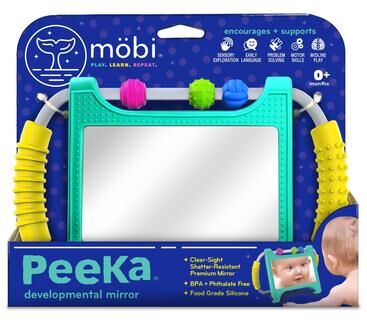
Mobi Peeka Development MirrorPEEKA® developmental mirror was designed by our team of doctors, therapists and parents to help children explore, learn and grow. When you place PEEKA® in the hands of your little ones, you will be amazed at the variety of ways they find to play...26,99 $*Shipping: 0,00 $Secure redirect to the provider
-
Classic Editions The Complete Art of War – 8 Book Hardback Box Set Sun Tzu & Ancient Chinese Military Strategy Classics Leadership, Warfare & Strategy CollectionExplore centuries of strategic thinking with The Complete Art of War – 8 Books Collection Hardback Box Set, an impressive collection of classical Chinese writings on warfare, leadership, tactics and strategy. Bringing together influential works from ancient Chinese military thought, this hardback collection includes titles such as The Art of War, Methods of the Sima, Wuzi, Wei Liaozi, Three Strategies of Huang Shigong, and Six Secret Teachings of Taigong, alongside additional works included in the eight-volume set. These enduring texts examine subjects including leadership, planning, discipline, intelligence, diplomacy, battlefield tactics and strategic decision-making. Although written in the context of ancient warfare, many of their principles have subsequently attracted readers interested in history, leadership and strategic thinking. Presented as an 8-volume hardback boxed collection, the set is ideal for readers of military history, students of classical philosophy and collectors of beautifully presented classic works. Why Readers Will Love This Collection Includes 8 hardback volumes in a collectible box set Features influential works of ancient Chinese military strategy Explores strategy, leadership, tactics and decision-making Excellent addition to military history and philosophy collections Attractive hardback format for a home or study library Ideal gift for history, strategy and classic literature enthusiasts The Complete Art of War 8 Book Collection brings together some of history's most enduring works on strategy in one impressive hardback set. Titles In This Set: Notebook Questions and Replies Three Strategies of Huang Shigong Wuzi Wei Liaozi The Methods of The Sima Six Secret Teachings of Taigong The Art of War16,99 £*Shipping: 2,99 £Secure redirect to the provider
-
What is a participle?
A participle is a form of a verb that can function as an adjective or be part of a verb phrase. There are two types of participles in English: the present participle, which ends in -ing (e.g. "walking"), and the past participle, which can end in -ed, -en, -d, -t, -n, or -ne (e.g. "broken"). Participles are used to modify nouns or pronouns, and they can also be used to form verb tenses such as the present perfect or past perfect. **
-
What is the difference between the past participle and the present participle?
The past participle is a verb form used to indicate a completed action or state that occurred in the past. It is often used with auxiliary verbs to form the perfect tenses (e.g., "has eaten," "had gone"). The present participle, on the other hand, is a verb form used to indicate an ongoing action or state in the present or future. It is formed by adding "-ing" to the base form of the verb and is used to create the progressive tenses (e.g., "is eating," "will be going"). **
-
How can the terms premature, simultaneous, and subsequent be explained in relation to past participle, present participle, and future participle?
The terms premature, simultaneous, and subsequent can be explained in relation to past participle, present participle, and future participle based on their timing in relation to the action of the verb. The past participle refers to an action that has already been completed, making it premature in relation to the present moment. The present participle refers to an action that is happening at the same time as something else, making it simultaneous. The future participle refers to an action that will happen at a later time, making it subsequent to the present moment. These terms help to clarify the timing of the action in relation to the verb. **
-
What is a substantivized participle?
A substantivized participle is a verb form that has been turned into a noun by adding a definite article and declining it for case, gender, and number. In other words, it is a participle that has been transformed into a noun and can function as a subject, object, or complement in a sentence. This process allows the participle to take on the characteristics of a noun while still retaining some of its verbal qualities. **
* All prices are inclusive of VAT and, if applicable, plus shipping costs. The offer information is based on the details provided by the respective shop and is updated through automated processes. Real-time updates do not occur, so deviations can occur in individual cases. ** Note: Parts of this content were created by AI.