Buy consulting24.eu ?
We are moving the project
consulting24.eu .
Are you interested in purchasing the domain
consulting24.eu ?
domain@kv-gmbh.de · 0541-91531010
Buy consulting24.eu ?
Aren't all the coefficients of the regression analysis significant?
Not necessarily. In a regression analysis, the coefficients represent the effect of each independent variable on the dependent variable. The significance of the coefficients is determined by their p-values. If the p-value is less than the chosen significance level (usually 0.05), then the coefficient is considered significant. However, if the p-value is greater than the significance level, then the coefficient is not considered significant. Therefore, not all coefficients in a regression analysis are necessarily significant. **
What are math coefficients?
Math coefficients are the numerical factors that are multiplied by variables in algebraic expressions or equations. They represent the scale or magnitude of the variable in the expression. For example, in the expression 3x + 5, the coefficient of x is 3. Coefficients are important in understanding the behavior and relationships between variables in mathematical equations and expressions. **


Similar search terms for Coefficients
Top-Angebote
Products related to Coefficients:
-
Flythe Consulting Arika Wall Sconce Pair, Pair, Satin NickelThe Arika Wall Sconce Pair is an adaptation of old-fashioned light fixtures, with an appealing design that will complement modern decor. The lacquered solid brass sconces have 4.75 dia.x7 H clear glass hurricanes that will protect your standard...179,00 $*Shipping: 22,95 $Secure redirect to the provider
-
Sesderma Reti Age 5 Liposomal Serum Anti-Aging Innovation 30mLA facial serum for wrinkles and signs of ageing. Reduces wrinkles and fine lines. Hydrates and strengthens barrier. Restores youthful radiance. 5-Retinoid System: smooths wrinkles, accelerates renewal, and boosts collagen. Biomimetic Peptides: fill expression lines by stimulating collagen synthesis.54,51 £*Shipping: 5,34 £Secure redirect to the provider
-
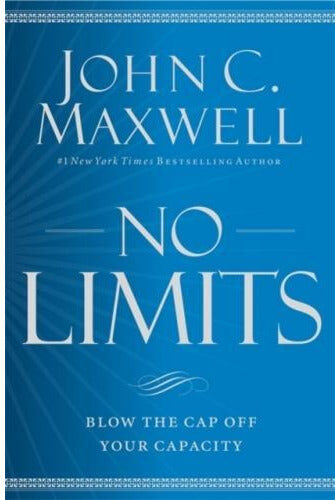
Little Brown Book Group No Limits: Blow the Cap Off Your Capacity by John C. Maxwell – Personal Growth & Leadership Development GuideNo Limits: Blow the CAP Off Your Capacity Description We often treat the word capacity as if it were a natural law of limitation. Unfortunately; most of us are much more comfortable defining what we perceive is off limits rather than what's possible. Could it be that many people have allowed what they perceive as capacity to define them? Have they allowed their perception to limit their attitudes about their potential? In his newest book; John Maxwell identifies 17 core capacities. Some of these are abilities we all already possess; such as energy; creativity and leadership. Others are aspects of our lives controlled by our choices; like our attitudes; character; and intentionality. Maxwell examines each of these 17 capacities; and provides clear and actionable advice on how you can increase your potential in each. He will guide you on how to identify; grow; and apply your critical capacities to your daily life. Once you've blown the 'cap' off your capacities; you'll find yourself more successful--and fulfilled--in your daily life.5,99 £*Shipping: 2,99 £Secure redirect to the provider
-
Flythe Consulting Brookville Wall Sconce Pair Antique Brass, Pair, Antique BrassThe Brookville Antique Brass Wall Sconce Pair uses simple design and a delicate aesthetic to create a truly elegant appeal. Each handcrafted, solid lacquered brass sconce has a scrolling arm, solid backplate, chain accents, and a 6 dia.x9 H etched...324,99 $*Shipping: 0,00 $Secure redirect to the provider



-
What are coefficients in chemistry?
In chemistry, coefficients are the numbers placed in front of chemical formulas in a balanced chemical equation. These coefficients represent the ratio of moles of each substance involved in the reaction. Coefficients are used to balance chemical equations by ensuring that the number of atoms of each element is the same on both sides of the equation. They help in determining the stoichiometry of a reaction, which is the quantitative relationship between reactants and products in a chemical reaction. **
-
How are extinction coefficients calculated?
Extinction coefficients are calculated by measuring the absorbance of a substance at a specific wavelength using a spectrophotometer. The absorbance value is then used in the Beer-Lambert law equation, A = εlc, where A is the absorbance, ε is the extinction coefficient, l is the path length of the sample, and c is the concentration of the substance. By rearranging the equation, the extinction coefficient (ε) can be calculated by dividing the absorbance (A) by the product of the path length (l) and concentration (c) of the substance. **
-
How do I determine the coefficients?
To determine the coefficients in a mathematical equation, you can use various methods depending on the type of equation. For linear equations, you can use the method of substitution or elimination to solve for the coefficients. For quadratic equations, you can use the method of completing the square or the quadratic formula to find the coefficients. In general, you can also use regression analysis or curve fitting techniques to determine the coefficients in a more complex equation. **
-
How do you determine the coefficients?
The coefficients in a mathematical equation are determined through a process called regression analysis. This involves using statistical techniques to find the best-fitting line or curve that represents the relationship between the variables in the equation. The coefficients are then calculated based on the data points and the specific regression model being used, such as linear regression or polynomial regression. The goal is to find the coefficients that minimize the difference between the predicted values from the model and the actual observed values in the data. **


How do you calculate the extinction coefficients?
The extinction coefficient, also known as molar absorptivity, is calculated using the Beer-Lambert law, which relates the absorbance of a substance to its concentration and the path length of the sample. The formula for calculating the extinction coefficient is ε = A / (c * l), where ε is the extinction coefficient, A is the absorbance, c is the concentration, and l is the path length. By measuring the absorbance of a known concentration of the substance at a specific path length, the extinction coefficient can be determined. This value is important for quantifying the concentration of a substance in a solution using spectrophotometry. **
What is the problem with the coefficients?
The problem with the coefficients is that they can be sensitive to the scale of the input variables. This means that if the input variables are on different scales, the coefficients may not accurately represent the true relationship between the variables and the target. Additionally, coefficients can be difficult to interpret when the input variables are not standardized, making it challenging to compare the impact of different variables on the target. Standardizing the input variables can help address these issues by putting them on the same scale and making the coefficients more interpretable and comparable. **
Top-Angebote
Products related to Coefficients:
-
EISENBERG Anti-Ageing Expertise skin care setEISENBERG Anti-Ageing Expertise, , Skin Serums for Women, Everything for beautiful-looking skin in one package. The EISENBERG Anti-Ageing Expertise beauty gift set contains not one but several products to help you create or enrich your daily beauty routine and make you or your loved ones happy to get it as a gift. The set contains: Eisenberg Classique Soin Anti-Âge anti-wrinkle firming cream 50 ml Eisenberg Classique Hydra Lifting light gel-cream for intensive hydration 15 ml Eisenberg Classique Sérum Régénérant Liftant anti-wrinkle lifting serum for tired skin 7,5 ml Characteristics: a set of cosmetic products for everyday use products for deep nourishment and hydration for perfectly soft and smooth skin a treat for any woman How to use: Use every product from the cosmetic set according to the instructions.146,80 £*Shipping: 3,99 £Secure redirect to the provider
-
Flythe Consulting Arika Wall Sconce Pair, Pair, Satin NickelThe Arika Wall Sconce Pair is an adaptation of old-fashioned light fixtures, with an appealing design that will complement modern decor. The lacquered solid brass sconces have 4.75 dia.x7 H clear glass hurricanes that will protect your standard...179,00 $*Shipping: 22,95 $Secure redirect to the provider
-
Sesderma Reti Age 5 Liposomal Serum Anti-Aging Innovation 30mLA facial serum for wrinkles and signs of ageing. Reduces wrinkles and fine lines. Hydrates and strengthens barrier. Restores youthful radiance. 5-Retinoid System: smooths wrinkles, accelerates renewal, and boosts collagen. Biomimetic Peptides: fill expression lines by stimulating collagen synthesis.54,51 £*Shipping: 5,34 £Secure redirect to the provider
-
Aren't all the coefficients of the regression analysis significant?
Not necessarily. In a regression analysis, the coefficients represent the effect of each independent variable on the dependent variable. The significance of the coefficients is determined by their p-values. If the p-value is less than the chosen significance level (usually 0.05), then the coefficient is considered significant. However, if the p-value is greater than the significance level, then the coefficient is not considered significant. Therefore, not all coefficients in a regression analysis are necessarily significant. **
-
What are math coefficients?
Math coefficients are the numerical factors that are multiplied by variables in algebraic expressions or equations. They represent the scale or magnitude of the variable in the expression. For example, in the expression 3x + 5, the coefficient of x is 3. Coefficients are important in understanding the behavior and relationships between variables in mathematical equations and expressions. **
-
What are coefficients in chemistry?
In chemistry, coefficients are the numbers placed in front of chemical formulas in a balanced chemical equation. These coefficients represent the ratio of moles of each substance involved in the reaction. Coefficients are used to balance chemical equations by ensuring that the number of atoms of each element is the same on both sides of the equation. They help in determining the stoichiometry of a reaction, which is the quantitative relationship between reactants and products in a chemical reaction. **
-
How are extinction coefficients calculated?
Extinction coefficients are calculated by measuring the absorbance of a substance at a specific wavelength using a spectrophotometer. The absorbance value is then used in the Beer-Lambert law equation, A = εlc, where A is the absorbance, ε is the extinction coefficient, l is the path length of the sample, and c is the concentration of the substance. By rearranging the equation, the extinction coefficient (ε) can be calculated by dividing the absorbance (A) by the product of the path length (l) and concentration (c) of the substance. **
Similar search terms for Coefficients
-
Little Brown Book Group No Limits: Blow the Cap Off Your Capacity by John C. Maxwell – Personal Growth & Leadership Development GuideNo Limits: Blow the CAP Off Your Capacity Description We often treat the word capacity as if it were a natural law of limitation. Unfortunately; most of us are much more comfortable defining what we perceive is off limits rather than what's possible. Could it be that many people have allowed what they perceive as capacity to define them? Have they allowed their perception to limit their attitudes about their potential? In his newest book; John Maxwell identifies 17 core capacities. Some of these are abilities we all already possess; such as energy; creativity and leadership. Others are aspects of our lives controlled by our choices; like our attitudes; character; and intentionality. Maxwell examines each of these 17 capacities; and provides clear and actionable advice on how you can increase your potential in each. He will guide you on how to identify; grow; and apply your critical capacities to your daily life. Once you've blown the 'cap' off your capacities; you'll find yourself more successful--and fulfilled--in your daily life.5,99 £*Shipping: 2,99 £Secure redirect to the provider
-
Flythe Consulting Brookville Wall Sconce Pair Antique Brass, Pair, Antique BrassThe Brookville Antique Brass Wall Sconce Pair uses simple design and a delicate aesthetic to create a truly elegant appeal. Each handcrafted, solid lacquered brass sconce has a scrolling arm, solid backplate, chain accents, and a 6 dia.x9 H etched...324,99 $*Shipping: 0,00 $Secure redirect to the provider
-
DK The Month-by-Month Baby Book: In-depth, Monthly Advice on Your Baby's Growth, Care, and Development in the First YearThe only book new parents will need for the extraordinary first year of their baby's life. This comprehensive book covers every moment of the first twelve months of your baby's life - from their first moments at home, feeding, and sleeping arrangements, to travelling, building their body strength, and starting to eat solids. A team of expert paediatricians, midwives, psychologists, and nutritionists provide unrivalled detail on everything new parents can expect. This new edition has been updated with the latest medical advice for a new generation of parents, and includes reassuring answers to common questions, offering additional support for whenever you need it. The Month-by-Month Baby Book perfectly complements the bestselling The Day-by-Day Pregnancy Book.16,99 £*Shipping: 2,99 £Secure redirect to the provider
-
Officially Licensed Gas Safe Gas Safe® Warning Advisory Report Form - Pad of 50Our Gas Safe Premium Warning Advisory Record Pad features 50 sets of 3-part forms, now fully updated to comply with the latest Danger Do Not Use Warning Notice GSR-DDNUPAD1 regulations. These Licensed Gas Safe Premium Pads are thoughtfully designed in a landscape format, making it easier for engineers to complete records on-site. Each pad includes double covers with a writing guard, reinforced with triple stitching and binding tape for enhanced durability. The forms are individually numbered and perforated on the left-hand side, ensuring the spine remains intact when sections are removed. This pad is ideal for documenting unsafe gas appliance or installation faults, including Immediately Dangerous (ID), At Risk (AR), and Not to Current Standards (NCS) situations. Copies are provided for the gas user, the gas engineer/business, and, when necessary, the landlord.13,50 £*Shipping: 5,00 £Secure redirect to the provider
-
How do I determine the coefficients?
To determine the coefficients in a mathematical equation, you can use various methods depending on the type of equation. For linear equations, you can use the method of substitution or elimination to solve for the coefficients. For quadratic equations, you can use the method of completing the square or the quadratic formula to find the coefficients. In general, you can also use regression analysis or curve fitting techniques to determine the coefficients in a more complex equation. **
-
How do you determine the coefficients?
The coefficients in a mathematical equation are determined through a process called regression analysis. This involves using statistical techniques to find the best-fitting line or curve that represents the relationship between the variables in the equation. The coefficients are then calculated based on the data points and the specific regression model being used, such as linear regression or polynomial regression. The goal is to find the coefficients that minimize the difference between the predicted values from the model and the actual observed values in the data. **
-
How do you calculate the extinction coefficients?
The extinction coefficient, also known as molar absorptivity, is calculated using the Beer-Lambert law, which relates the absorbance of a substance to its concentration and the path length of the sample. The formula for calculating the extinction coefficient is ε = A / (c * l), where ε is the extinction coefficient, A is the absorbance, c is the concentration, and l is the path length. By measuring the absorbance of a known concentration of the substance at a specific path length, the extinction coefficient can be determined. This value is important for quantifying the concentration of a substance in a solution using spectrophotometry. **
-
What is the problem with the coefficients?
The problem with the coefficients is that they can be sensitive to the scale of the input variables. This means that if the input variables are on different scales, the coefficients may not accurately represent the true relationship between the variables and the target. Additionally, coefficients can be difficult to interpret when the input variables are not standardized, making it challenging to compare the impact of different variables on the target. Standardizing the input variables can help address these issues by putting them on the same scale and making the coefficients more interpretable and comparable. **
* All prices are inclusive of VAT and, if applicable, plus shipping costs. The offer information is based on the details provided by the respective shop and is updated through automated processes. Real-time updates do not occur, so deviations can occur in individual cases. ** Note: Parts of this content were created by AI.